Fire Extinguisher : 101

Electrical Class C Fires: How to Fight Them
| Home |
| About Fire Extinguishers |
| Using a Fire Extinguisher |
| Fire Prevention |
| Fire Hazards |
| First Aid for Fire |
| Financial Protection |
| Biggest Fires in History |
| Firefighters |
This site was voted:

by onlinefiresciencedegree.org
(scroll to 74 on the list)
This page provides information about class C fires. |
The various classes of fire designate the hazards involved and the most effective method of fighting the flames. Being familiar with the different types of fire is important for homeowners, landlords, and those holding a supervisory position. In both commercial and residential buildings, different classes of fire are encountered and each requires specific knowledge on how it started and how to properly go about putting it out. Class C fires burn combustibles, but are distinct because they involve electrical components or equipment with the potential to be energized.
 What
happens when electrical equipment is energized?
What
happens when electrical equipment is energized?
Generally
it is not dangerous to energize electrical components, gadgets, devices
and equipment. They do not present a hazard unless they are handled incorrectly
or have the potential to alter into something that presents a danger.
When a fire starts from a short circuit or another type of electrical problem, and the source of energy is still live, the situation is highly dangerous and a class C fire can typically occur. Note that this type of fire is designated as class E in the Australian standards.
Some examples of potential sources of class C fires include:
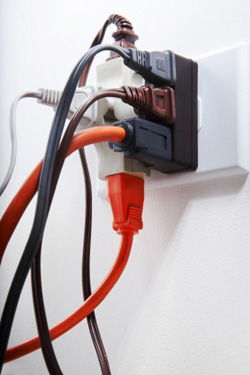
- Overloaded electrical outlets
- Incorrectly wired plugs, outlets and switches
- Short-circuits
If the flames have been designated as class C, the electrical supply needs to be identified and cut off. Electricity, when flowing freely, can serve as a constant source of ignition, allowing the combustibles to continue burning. All of the other elements of the fire tetrahedron are also present – oxygen, chemical reaction and fuel. In the case of class C, the electricity provides the ignition or spark.
Fighting
Class C Fires
The
most important thing to remember is that a class C fire cannot be fought
with water; you must use non-conductive substances. Carbon dioxide fire
extinguishers, and those loaded with a dry chemical like PKP, are effective.
Conductive substances such as water or foam can put the fire fighter at risk. When the source of electricity has not been cut off and water is sprayed into the flames, it can cause those electrical charges to spread and potentially create electrocution. If the electricity finds a path from the flames, through the water, to the fire fighter’s body, and into the ground, serious injury usually occurs; in fact, that kind of charge can be fatal.
Firefighting
Equipment
The
first step in fighting class C fires is to cut off the source of power,
basically transforming the flames into a standard class A fire. Standard
fire extinguishing methods can then be used to douse the flames.
Most often firefighters wear footwear with rubber soles (approved footwear often has the Omega symbol). Such boots cut off the path of electricity, protecting the wearer from electrocution even if conductive materials are in the air, such as water or foam.
Protecting
your Home against Class C Flames
It
is important that your home’s wiring is installed and updated according
to current building codes in order to prevent short circuits and overloads.
Keep your pets and young children away from electrical equipment in order
to protect them and reduce the risk of accidents that may cause a fire.
Do not use damaged cords and plugs.
Class C fires occur quickly and must be put out with equal speed. Knowing the proper way to fight this type of fire is important – it can save lives.